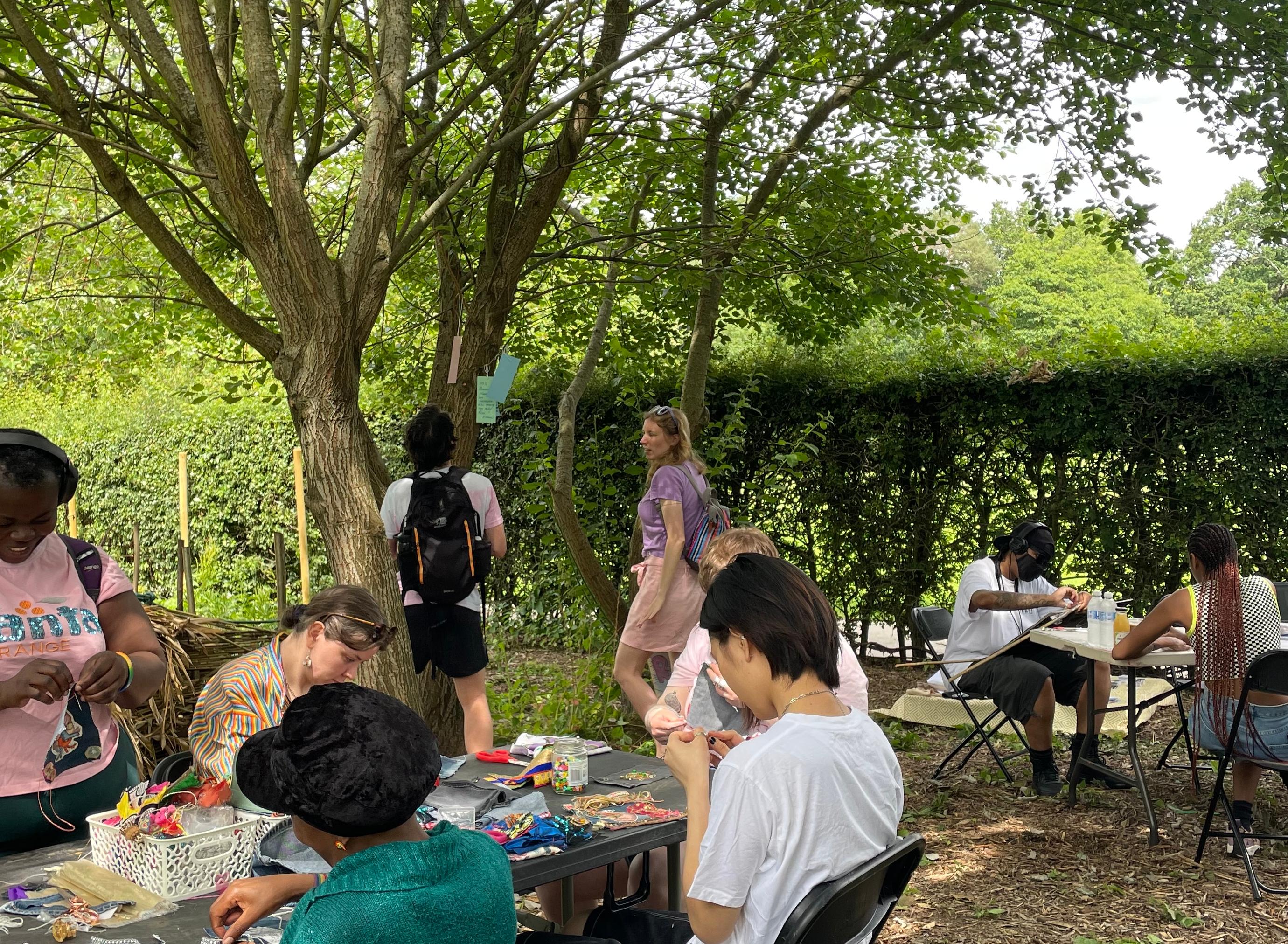
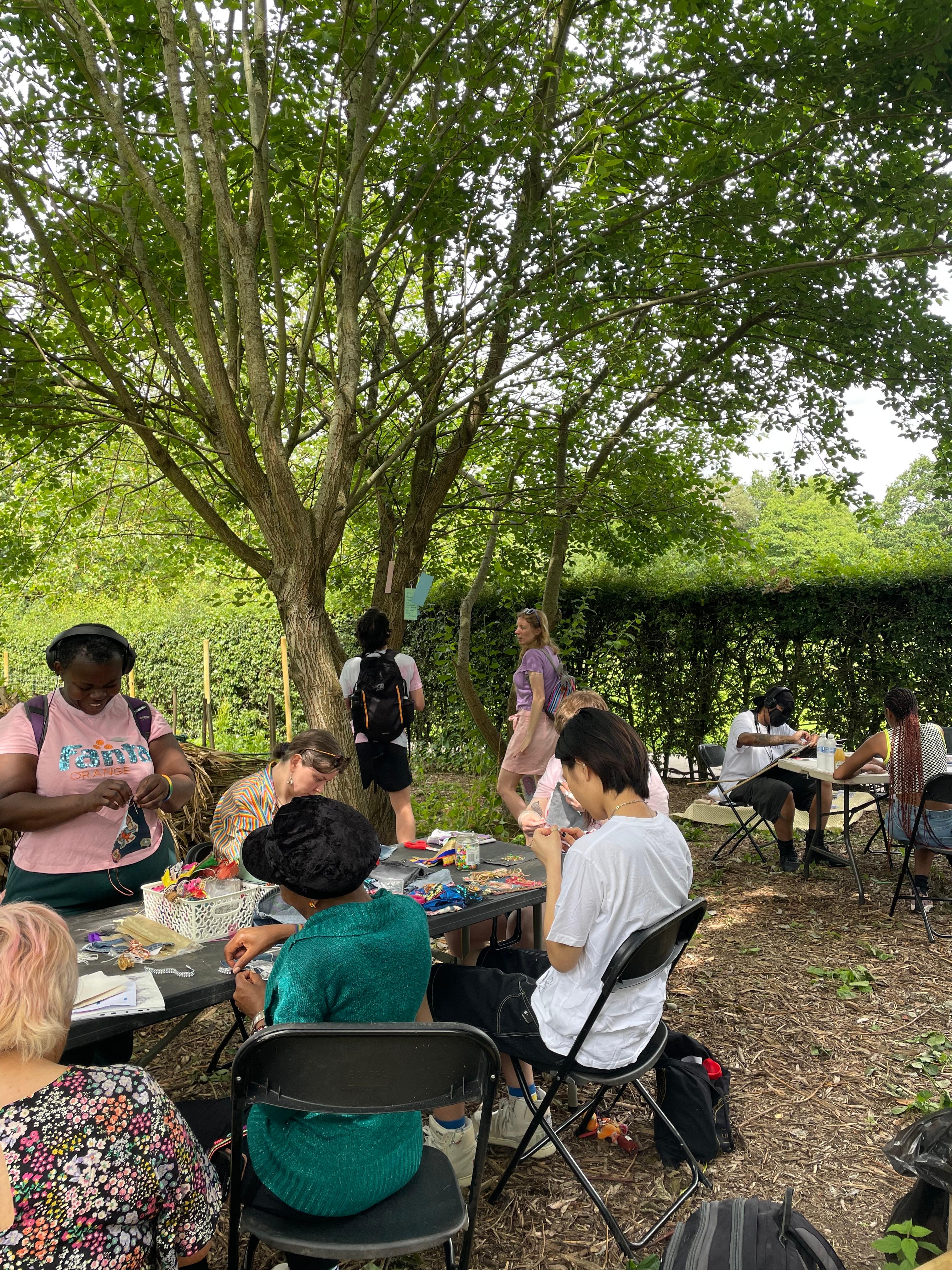
In commemoration of the June 1969 Stonewall riots in New York City, June is celebrated as Pride Month. This past June, we had the pleasure of supporting Queens Heath Pride during a beautiful Sunday that coincided with the summer solstice. The event featured a badge and match-making workshop led by artist Jane Thakoordin, as well as a letter-writing session facilitated by artist and poet Raymond, where attendees wrote to MPs concerning EHRC guidance.
Current legal landscapes in the UK, specifically following a Supreme Court ruling and the EHRC Code of Practice, have created a notable gap in equality protections for trans+ individuals. Detailed information on these developments is available here.
During the event, Jenny and I spent much time talking about the trees in our nursery and the work we have been doing as well as sharing our collections of books tree/queer/nature/art/science related. Much of our conversations would come back to Derek Jarman, the filmmaker, activist, and gardener. After a HIV diagnosis in 1986, Jarman bought Prospect Cottage, situated on the shingle shores of Dungeness. In a landscape that is considered as Britain's only desert, with a looming decommissioned nuclear station and an absence of trees, Jarman cultivated a garden where the only “ boundaries are the horizon”. This garden is full of sea kale, californian poppies, borage, lavender, foxglove, and many other plants that are tough and happy to tolerate harsh, salty and windy conditions. Prospect Cottage remains a sanctuary years after Jarman’s passing, and amongst the plants are sculptures that are perhaps a little tree-like, made of collected driftwood and rusting metal parts. In the garden, using some found materials or large rocks, Jarman also constructed concentric circles - which make me think of the rings of trees (but of course I'm going to say that) or water ripples. This was Jarman's "paradise" garden.
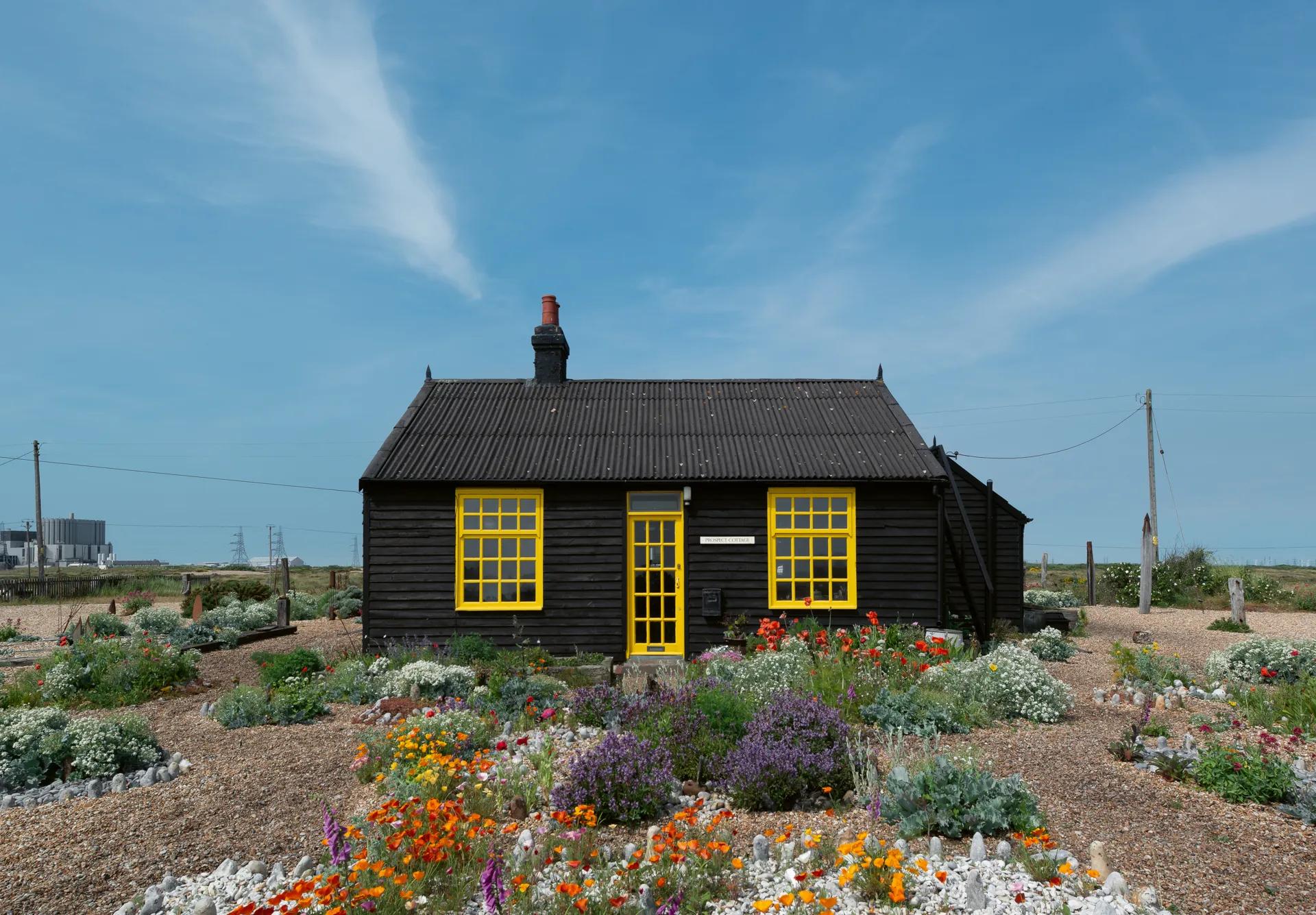
Image credit: © Gilbert McCarragher
Queens Heath Pride allowed us to welcome others into our own tree-filled paradise.
In 2021, against the backdrop of anti-LGBTQIA+ protests outside Birmingham schools, Queens Heath Pride was born, a form of counter-protest/social experiment hybrid to investigate the effect that improving an area for queer people could have. Their work over the last 5 years has quickly evolved, highlighting the importance of their hybrid investigation and Queens Heath Pride is now an example of foundational and public care and love in practice. You can learn more about their organising and ways to support here.
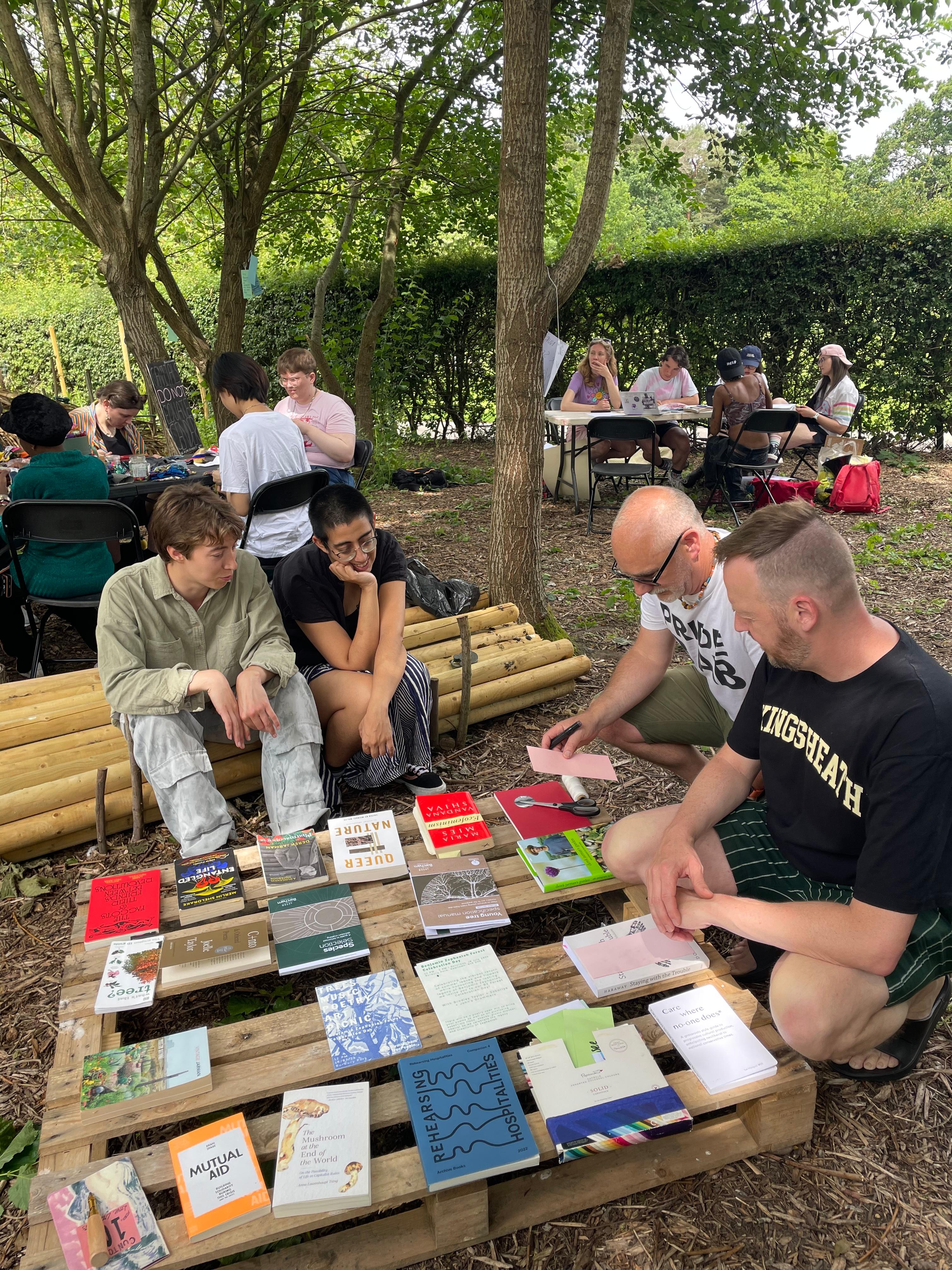
Meeting so many incredible people and sharing this space was a true privilege. The day sparked so many generous conversations about queer ecology and the inherent fluidity found in nature.
Botany offers a fascinating perspective on such fluidity; research indicates that between 85-90% of flowering plants are hermaphroditic, possessing both female and male reproductive organs within a single flower. Furthermore, numerous species possess the ability to alter their sexual expression in response to environmental stress, size, or age.
Historical botanical trends also reflect social shifts. The 19th-century Pteridomania, AKA "fern madness", acted as a catalyst for women's empowerment and social liberation in Victorian England.
Victorian culture predisposed people to categorise and see sex in everything. Flowering plants have sexual organs, and women who wanted to go on walks to pick flowers would have to be chaperoned by men to ‘protect’ their delicate minds from this sexual influence. However, ferns are asexual and don’t flower, meaning they were deemed appropriate and harmless for women to pick without the presence of men. At the peak of this fern obsession, Victorian hostesses often traded traditional tea parties for unchaperoned fern-hunting expeditions. Such fern forays were viewed as a wholesome outdoor activity, but also provided women with a rare degree of autonomy. The girlies yearn for the ferns.
Also, digger deeper into Pteridomania, I learnt that the ornate patterns on Custard Creams are of ferns unfurlling, which if you couldn’t guess originated in the Victoruan Era. Next pride I shall make sure we have Custard Creams to offer to people.
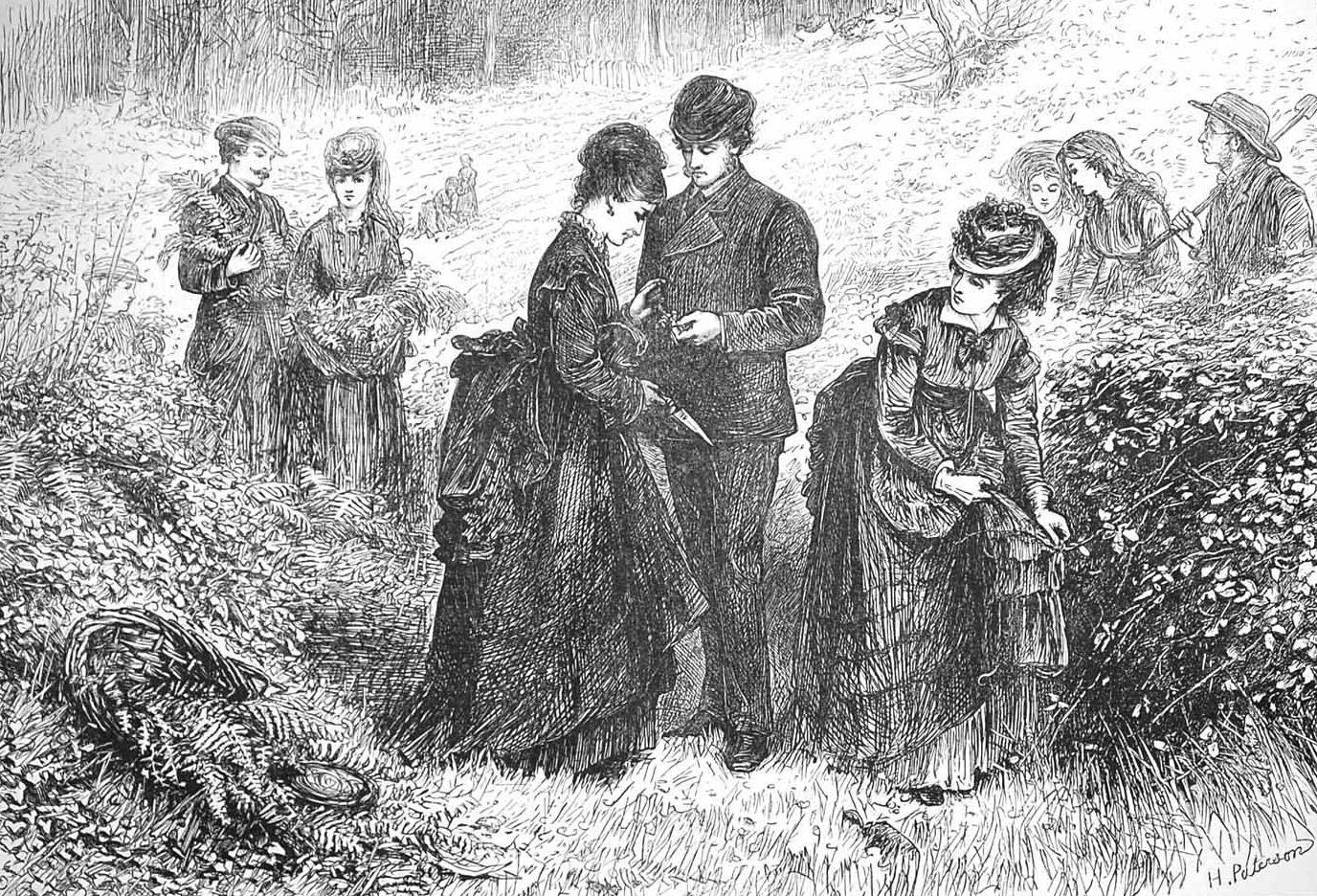
By Helen Allingham - http://www.prints-4-u.com/store/image2/P1580871/P1580871633.jpg, Public Domain, https://commons.wikimedia.org/w/index.php?curid=26589398
In this past tree planting season we planted five Gingko. They have a full canopy, with lime-green leaves in the summer and warm yellow leaves in the autumn. Their leaves also look similar to maidenhair ferns, but I wont talk more about ferns today. Ginkgo trees have distinct sexes however, this doesnt stop them from changing that later on. Identifying the sex of young Ginkgo individuals is not possible unless a male or female branch has been grafted onto rootstock and often city planners try to plant male trees as the female ones produce fruit that can smell. Ginkgo have beaten these binaries, changing the sex on a specific branch, branches or even their wholeself if they wish, sometimes producing pollen and other times producing fruit and sometimes both. Perhaps their ability to change sex is their secret to a long evolutionary lineage.
Throughout the day we invited people hang small notes from one of the trees in the space and people shared queer ecology facts, personal stories, words of affirmations, notes on the nursery. The tree has become our wishing tree in the space and has been added to during volunteer sessions since.
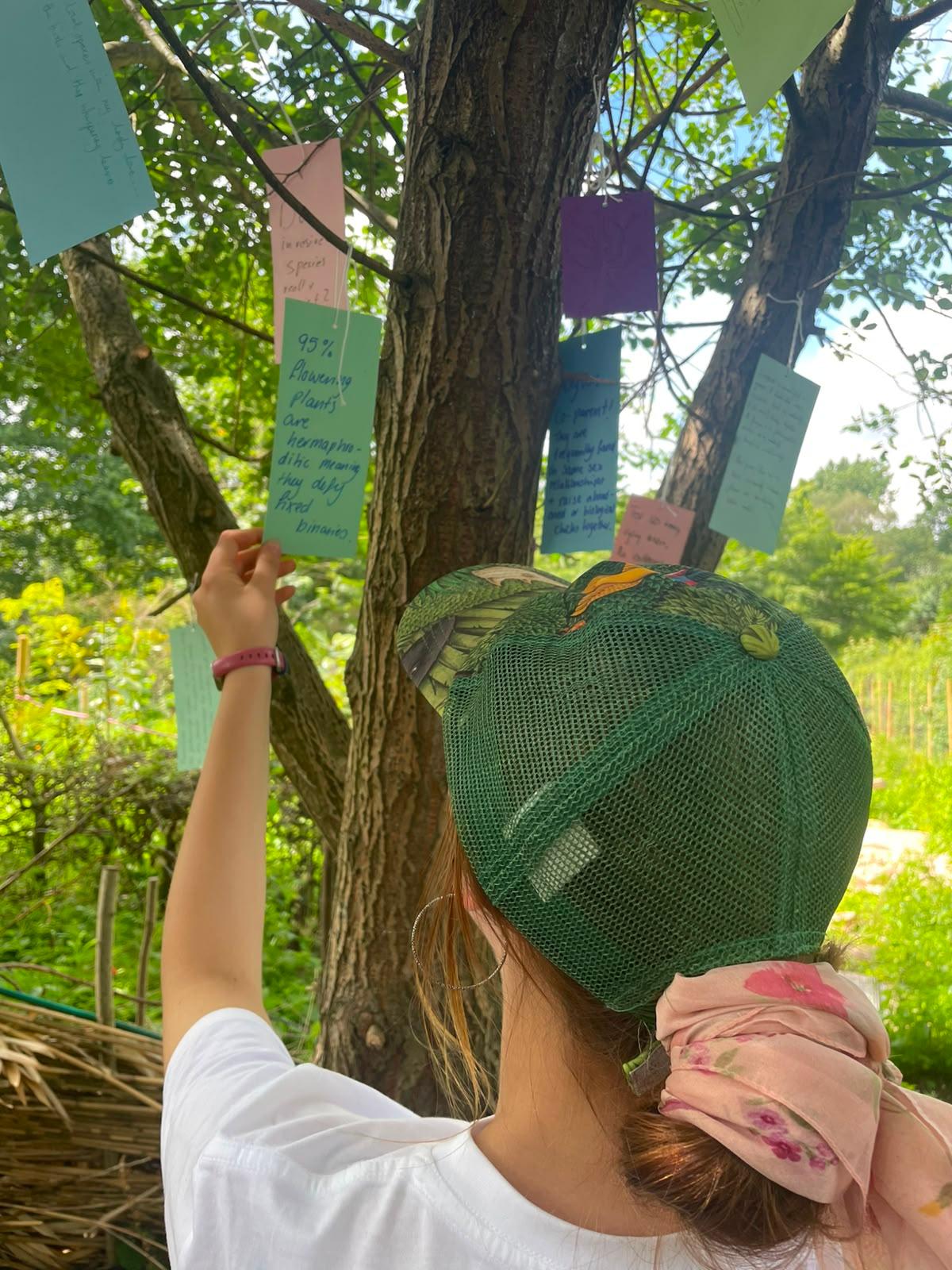
Happy Pride forever!