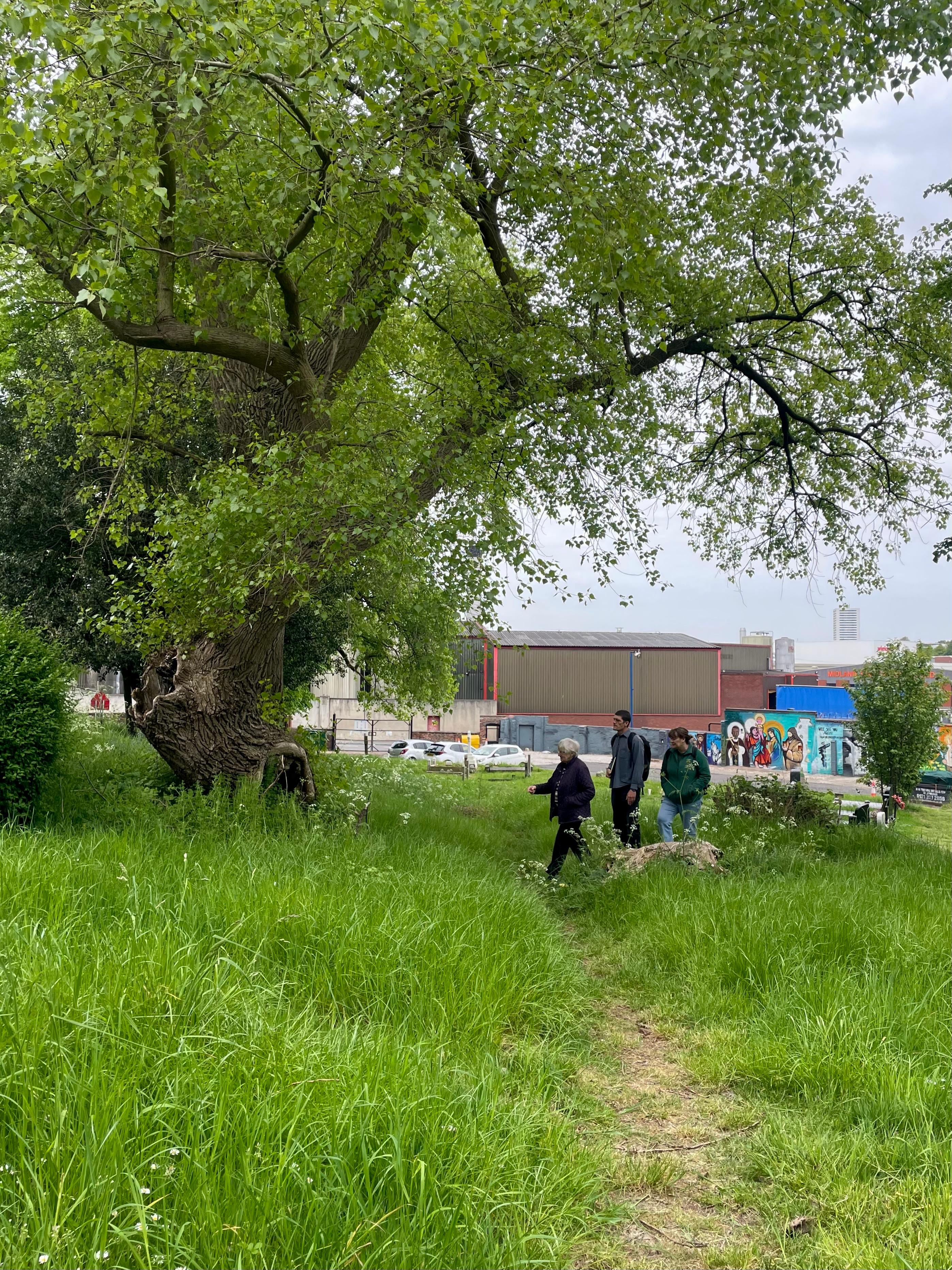
Sister Cathrine of St Joseph’s Church in Nechells, kindly took us around the church cemetery last month, sharing oral histories and information from a previous tree survey. The space is full of beautiful trees - there were many Poplars, Oaks, Sycamore, Limes and a Pear Tree to name a few. Lots that have been around longer than we have.
In 1850, the present sanctuary of the church was designed by Pugin as a mortuary chapel for the new four-acre cemetery surrounding the existing church. The church is now surrounded by many industrial buildings.
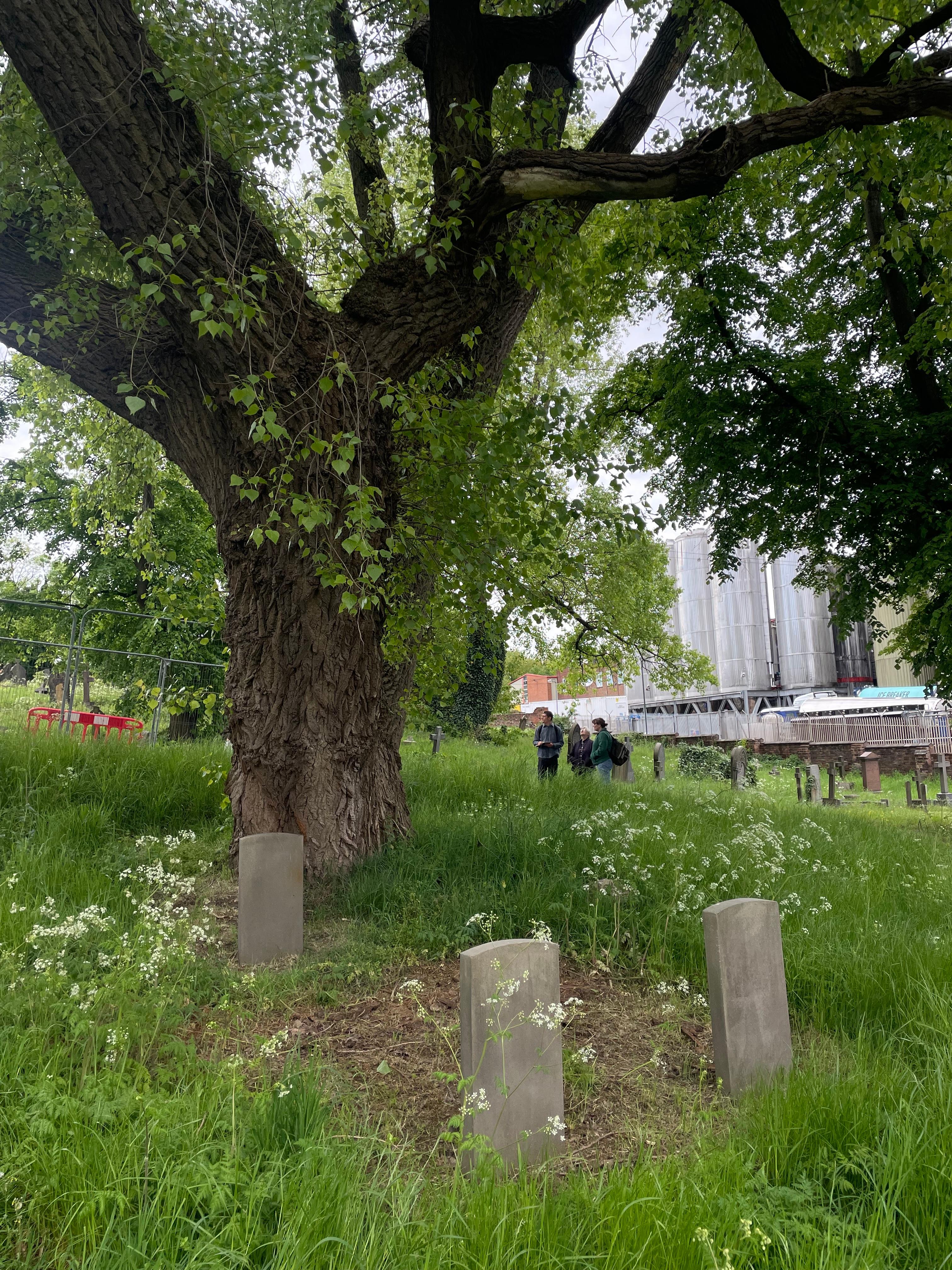
The Poplars were, Eastern Cottonwood Poplars to be exact - one which we estimated to be around 204 years old which can be worked out by dividing the tree’s circumference by the species average annual growth rate. The 5.1 meter circumference of this Poplar (image below), is given a Community Tree Index Value of £462,058 according to TreePlotter which is huge.
Poplars require significant amounts of water, therefore the slope on which this church is situated provides an ideal environment for them.
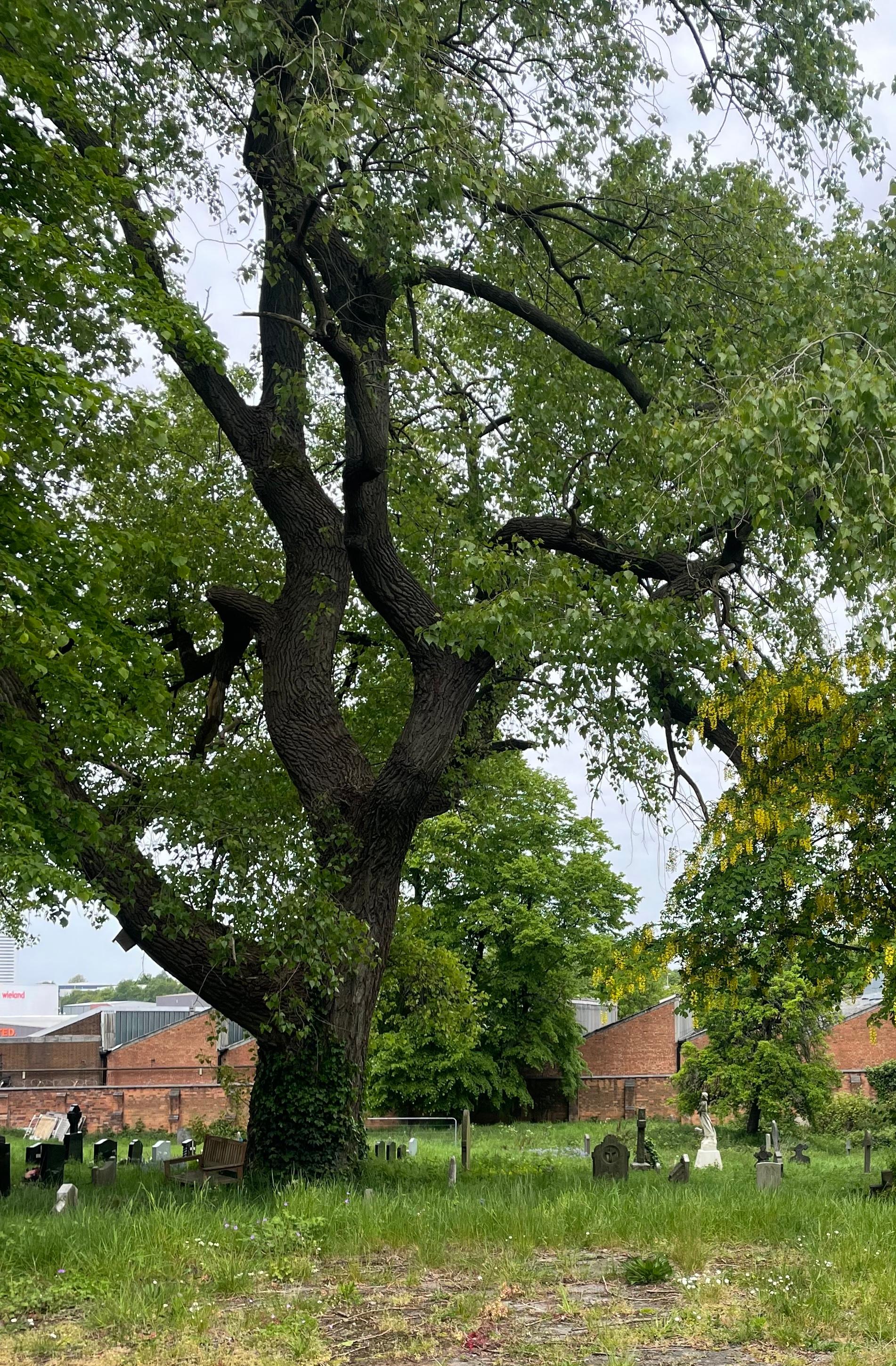
The area is quiet, therefore these large trees are generally left to grow undisturbed. In busier public areas or parks, trees of this size would typically be more closely monitored and controlled to mitigate risks such as falling branches. However, fallen limbs here can remain on the ground, creating natural nooks and crannies that serve as homes for minibeasts. One of the other Poplars has major hallowing but lots of good callus tissue (aka woodwound) which is a great spot for birds and bats to stay whilst on their travels.
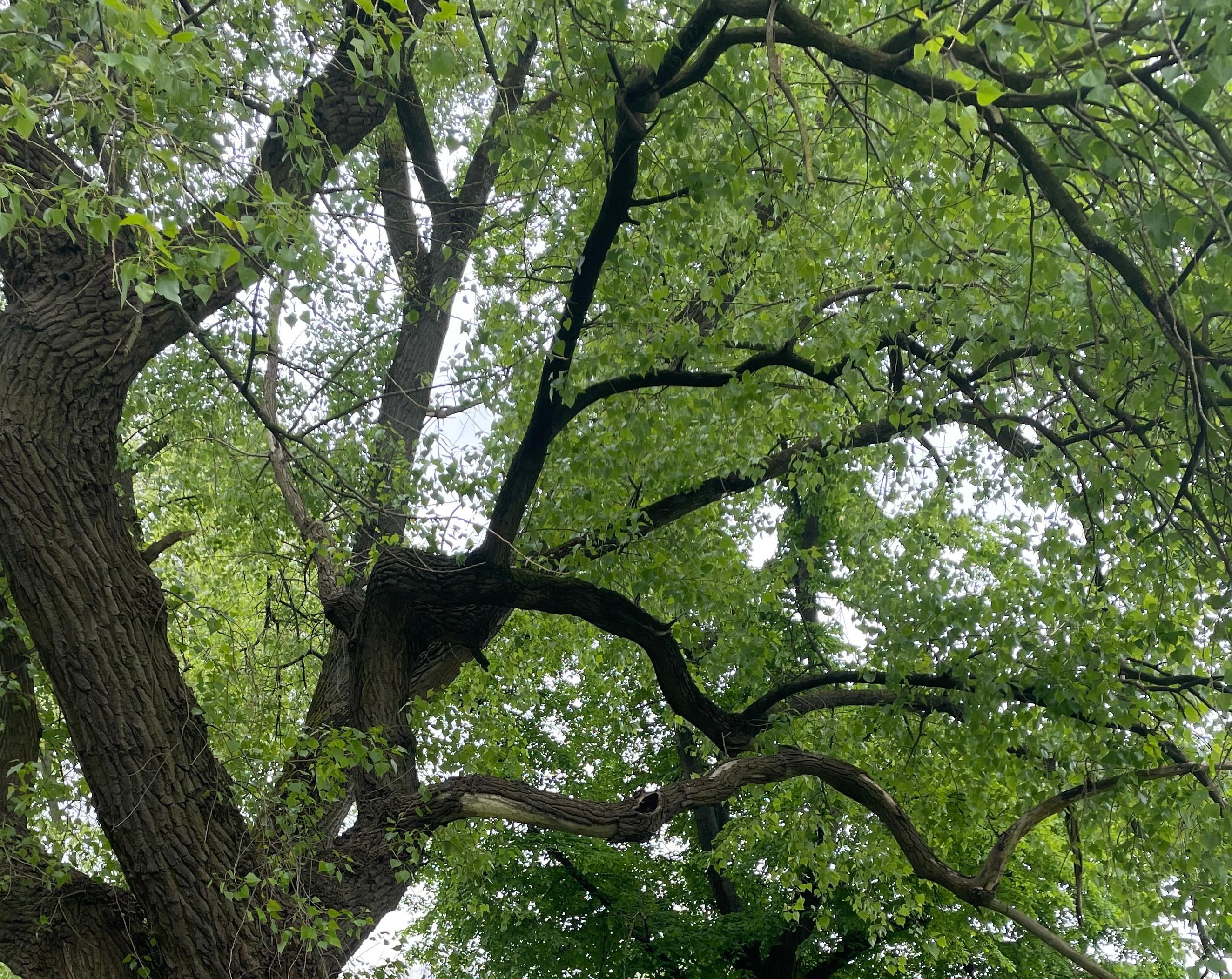
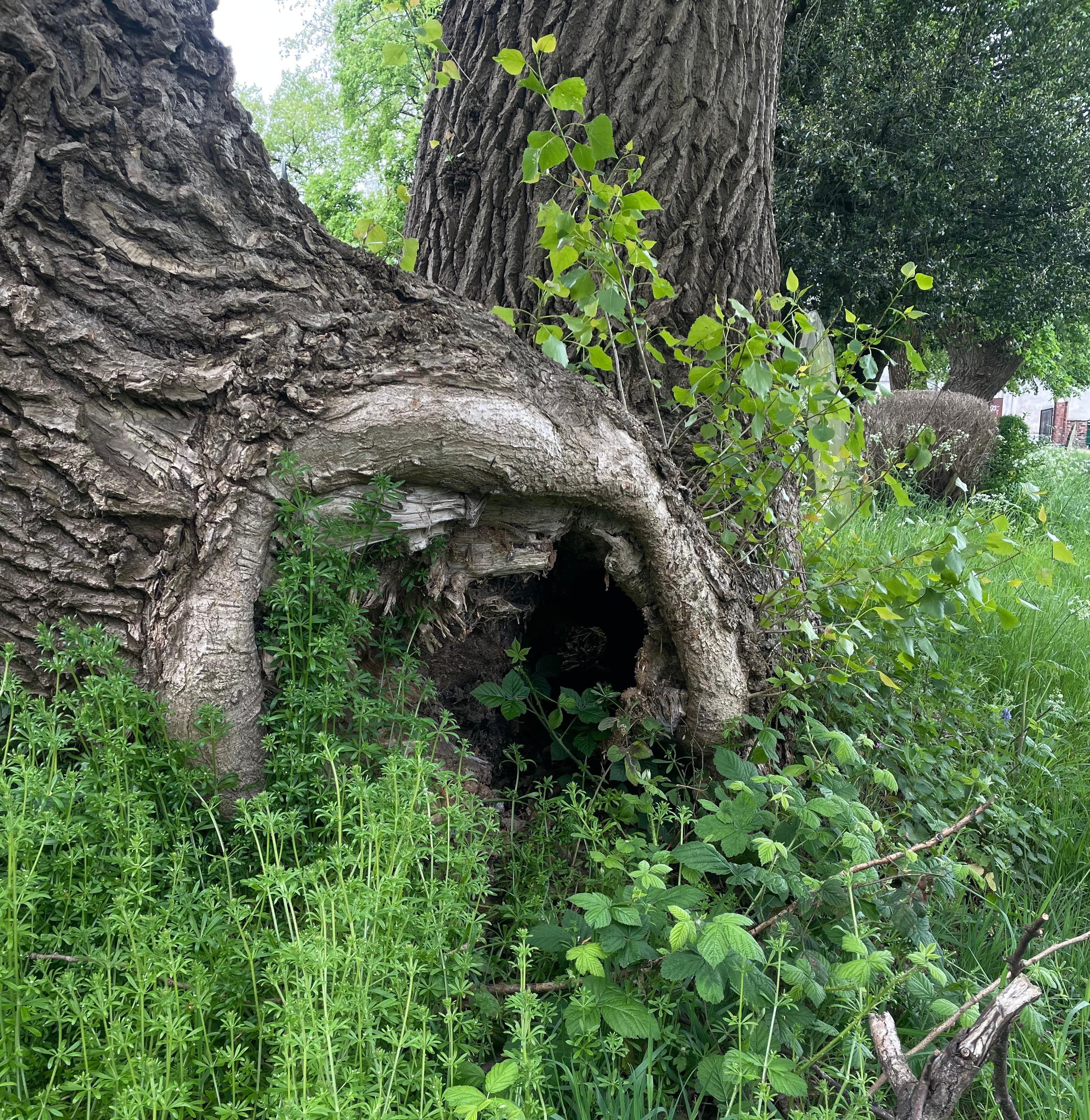
When making decisions about trees, especially those that far outlive us, it is important to consider the context of the space. It is also important to consider and muse over the life after life, reflecting on the habitats created for others creatures and beings by wood that remains on the ground.
Big thank you to Sister Cathrine for making this such a bountiful day.