The Tree Care Team
In a broad sense, our approach to tree care is focussed on long-term investment and maximising the health and impact on communities of our city’s trees. This means we take a slow approach in the ongoing care for trees across the city, one that is rooted in academic and anecdotal research and one which understands the needs of each tree to thrive in its location.

We have a dedicated and growing team of Tree Care Volunteers, led by our Tree Care Coordinator, who work across the seasons to help sustain the health of the trees we plant in different wards in Birmingham. We take a holistic approach to caring for trees from mulching practices, formative pruning, soil testing and watering that is crucial in a tree’s early developmental years. We also work to repair trees and their support infrastructure adapting their environments as they grow. We are sure to keep up-to-date with developing techniques and guidance around tree care, and we are working in a way that will help us adapt to a warming and unpredictable climate. We also encourage ongoing tree care education with our volunteers, we value the knowledge that new people bring to the places we are working and coming together to share this knowledge.

In addition to young trees around the city we also take care of larger, established trees. We assess their overall health and can help identify pests, diseases and risks to the tree that need addressing. Our goal is to grow canopy cover across the city and one of the best ways to do this is to maintain the older trees. For newly planted trees we work with external contractors who water and survey the trees on a weekly basis from May through to September for the first three years after planting. Each tree is given approximately 50L of water per week in this time to improve chances of successful establishment. Trees without this support are less likely to survive the first three-five years and are more susceptible to stresses such as drought, soil compaction, frost, pollution, damage and pests and diseases.
We have been working closely with different community groups from Alum Rock, Bromford & Hodge Hill, Newtown, Jewellery Quarter & Soho, Nechells and Lozells and are always looking for more volunteers to join the Tree Care team.
Our processes
Site specification
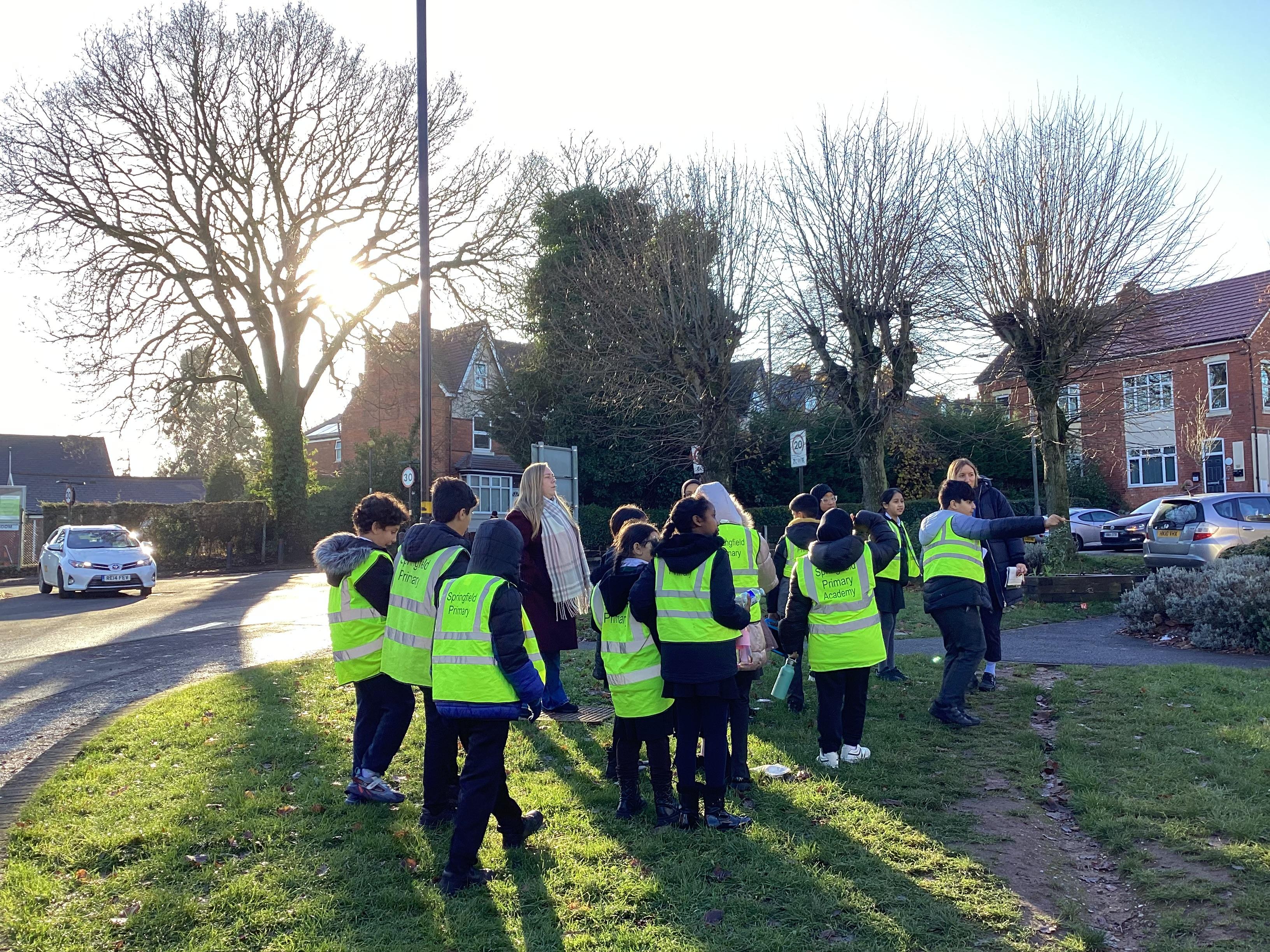
Good tree planting starts with a good location. We visit all locations prior to planting to better understand the soil structure, potential risks to the tree, the aspect and the soil biology and chemistry.
Site function
We need to understand how the site is currently used. Do kids play sports here? Do cars park here? Do the land managers mow or trim the grass? These functions and interactions can all impact the potential establishment of a tree, the tree’s function and whether a tree is even viable.
Species selection
Once we have our site, and understand it better, we need to specify which tree will be planted. We work with communities to understand the function needed to tackle a hyper-local issue and this guides decision making. We may select trees that can tolerate, and mitigate against, harmful pollution, or select species with beautiful flowers that improve a site’s aesthetic and boost health and wellbeing. We may slow the rate of surface water run-off by planting trees that can handle brief periods of waterlogging or perhaps fast growing trees with large leaves from shade provision.
Soil amendments
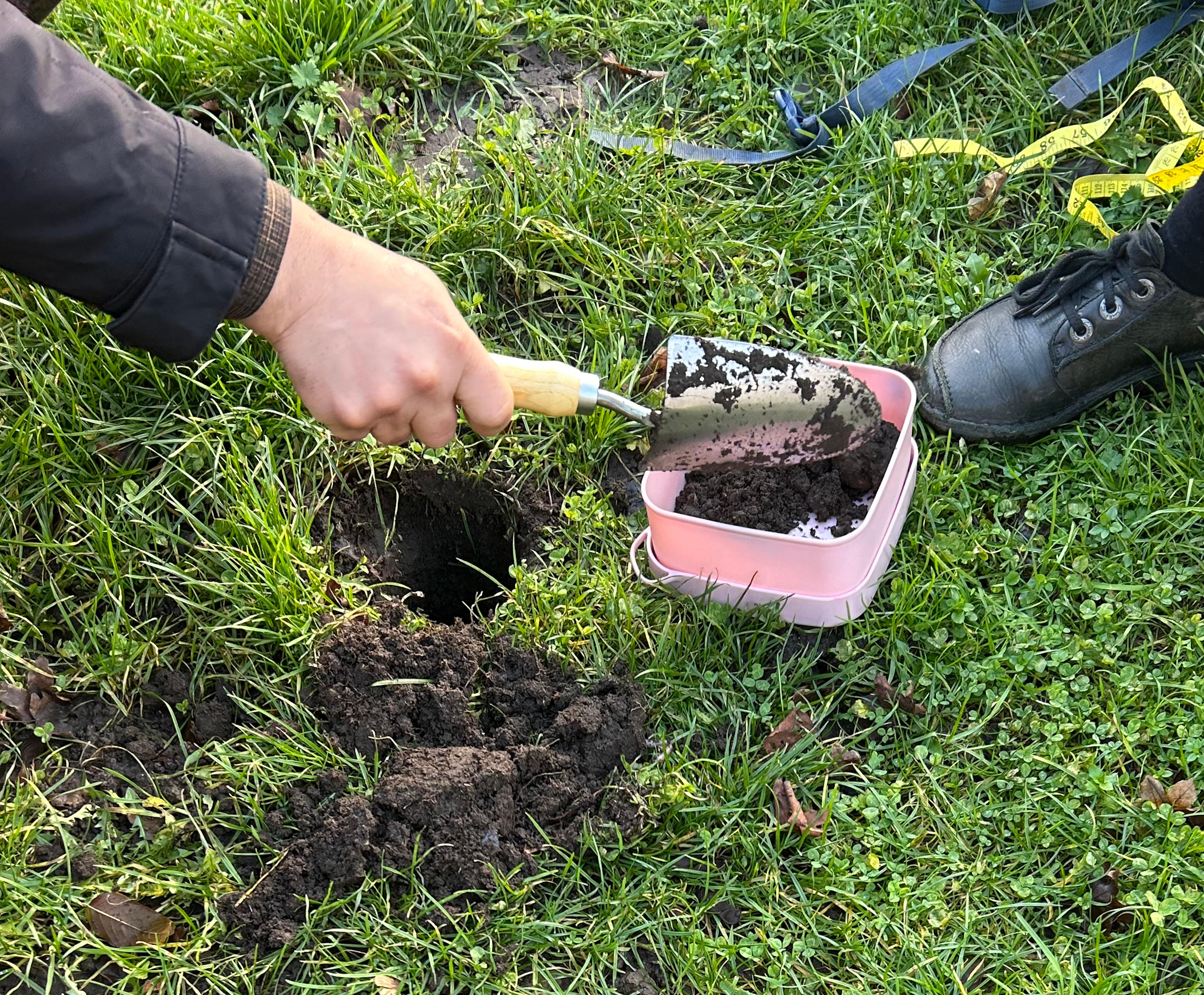
When preparing a tree pit we try to find a middle ground between minimising soil disturbance and enhancing the soil. We want the tree to explore the native soil, to do this we may aerate the top soil around the pit, or plant companion plants with large taproots. We dig a wide hole and add organic matter as a foundation. We are exploring ways to incorporate biostimulants such as biochar or mycorrhizal fungi.
Tree accessories
Once planted, we mulch the tree pit to a diameter of 1m-1.5m. Mulch helps to retain vital moisture, suppresses weed competition, reduces compaction and eventually breaks down to improve the soil below. We use a combination of 1-2 year leaf mould and fresh wood chip. We also support our trees with two stakes and use recycled bicycle inner tubes as supports. We don’t wrap the rubber around the tree to avoid constriction and to give the tree space to build strength through movement. Most of our trees have a 75L irrigation bag attached to one of the posts as well as a steel cage to protect from trimmer damage and compaction.
Post planting
Within six months after planting trees are assessed for any signs of damage, disease or crown dieback. Additional mulch and any repairs are carried out here. Formative pruning takes place at various stages during these first three years and we also help organise other types of tree care activities such as improved labelling and signage, or companion planting.