
The heat
“It’s hot”. That’s what people say to me this summer when I ask them “how are you doing?”.
They’re right. It is hot but, in fact, it's more than hot. Already this summer the UK’s weather has broken records for numbers of days above 34c (9), number of days above 35c (6) and a new temperature record for June of 37.7c. By mid July the UK had already recorded more days above 30c than the previous record holder, 1976 and it’s the first time ever temperatures have gone above 35c in three consecutive months (May, June, July). Predictions show it’s likely to persist through the school break too.
Heat, to a point, is not necessarily bad for trees, but hot weather normally equals dry spells and that is a problem. Since the end of February to July 20th, we’ve had 144.9mm of total rainfall in Birmingham which is just under half the historic average for the same period. The nature of averages is that they’re always on the move as new data is added and average UK rainfall figures are getting smaller year-on-year as we feel the effects of climate change. And although this year is bringing the averages down, it’s still surprisingly higher than the same period last year (3.5 times higher). How this cumulative lack of rainfall will impact trees is a scary story still being told, but the plot lines are predictable, the monster is disrupting things and the main characters are struggling. As the trees share information through airborne chemical signals or underground mycelial networks I suspect they are saying much more than “It’s hot”.
Impacts on trees
Trees are using water even before producing new leaves in the spring, as the sap begins to rise through their structure. Water helps the production of new leaves which in turn help the processes of photosynthesis necessary to survive and thrive. The water is a highway for vital minerals and nutrients moving through the tree. It is pulled up through the roots because of negative pressure suction created by water vapour leaving the tree through stomata (microscopic pores on the surface of leaves and stems). This process - evapotranspiration - is what helps to cool the air temperature around trees and contributes to reductions in urban heating.
This all works so long as the tree has access to CO2, sunlight and water, but if there’s a ceiling to any of these then the process ceases. With the drought we’re experiencing trees are not able to carry out their natural processes and as a result: growth slows and leaves and stems wilt and become brittle as the tree, fearing death, minimises its energy output.
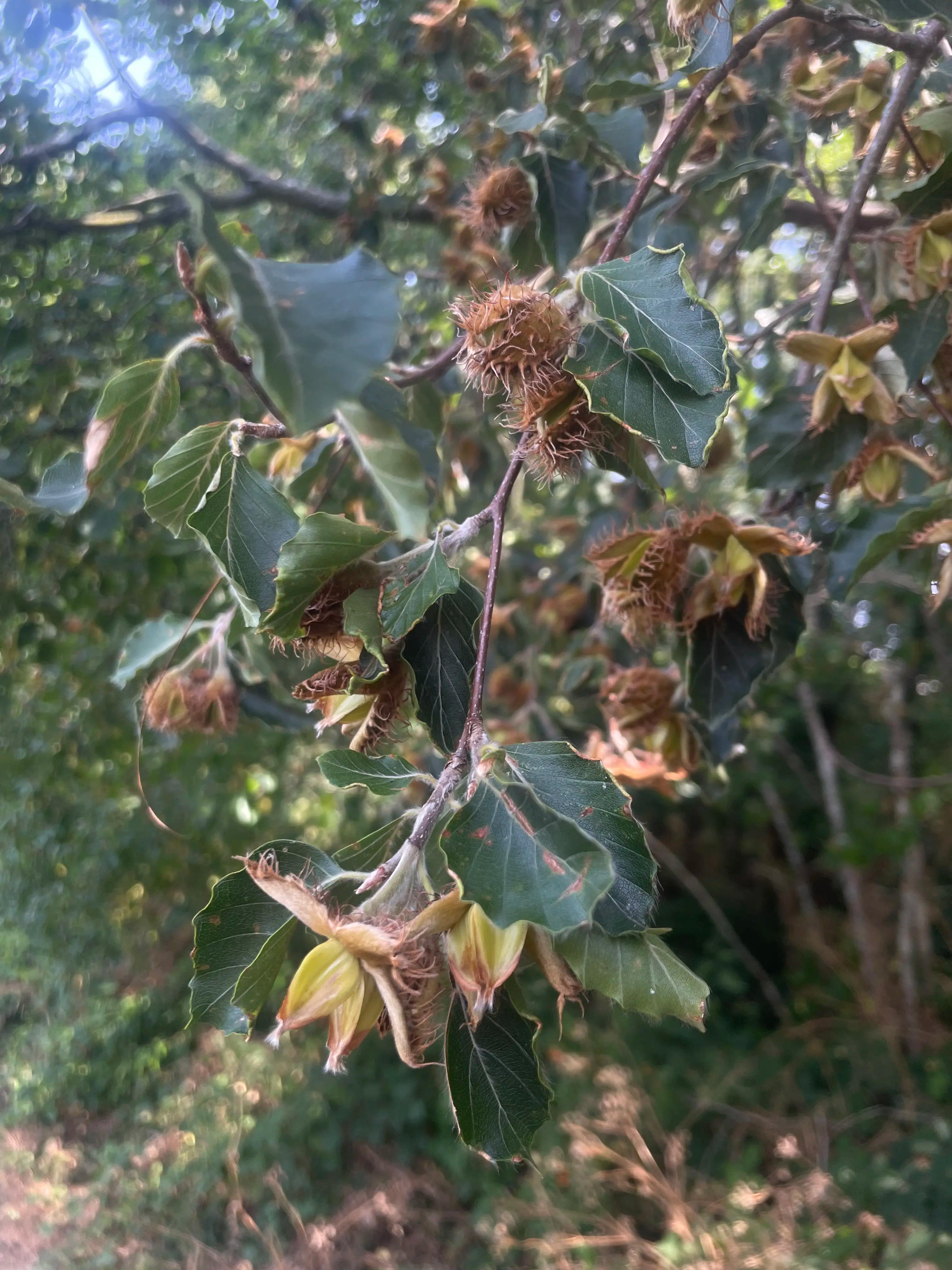
Common Beech (Fagus sylvatica) with curled, dry leaves and lots of fruit
For all our trees we commit to watering them for the first three summers post-planting. We commit to delivering at least 50L of water to each tree per week during the warmest 17 weeks of the year and we do this by paying contract teams. This is inline with the guidance for establishing new trees of this size, but this year this guidance is being tested and trees are struggling to cope with sunlight so hot it strips the surface of valuable water in minutes and soils that can dry out in a single day. Other typical stressors on urban trees such as soil compaction compound the issue as water runs off a compacted ground more easily and the impacts of air pollution are felt more keenly by an already stressed tree.
The trees respond in different ways. You may be noticing larger numbers of flowers, fruit or seeds appearing and, as anyone who’s ever deliberately stressed out their tomatoes will tell you, this is a reaction to drought as the plant desperately attempts to reproduce before they croak. Trees show their stress through wilted leaves and stems which are no longer held turgid by water content, curled leaves, which are an attempt by the tree to reduce water loss and brown, crispy leaves which are a sign of premature abscission (the cutting off of supplies to leaves and the reabsorption of valuable chlorophyll). Cracked and brittle bark is another common sight as the tree suddenly (in tree time) contracts and in some mature trees this can lead to Sudden Branch Drop Syndrome which poses a risk to public safety as large, healthy looking trees can shed huge branches onto unsuspecting shade seekers.
Impacts on People
This isn’t the only impact on people though. The losses of trees because of this weather will be as unprecedented as the weather itself and we’re expecting to lose twice as many as last year. Reductions in tree cover exacerbate health and wellbeing issues for the city’s population and leave people more vulnerable to other climate-related challenges such as flooding, increased air pollution, bush fires and of course urban heating.
It’s estimated that more than 2,700 people may have died as a result of the May and June heatwaves in England and Wales alone and this is a harrowing statistic echoed across Europe. Much like the trees, we respond to heat by losing water and if we don’t replace it quickly enough our body becomes stressed and we struggle to perform our life giving functions. Heat deaths are not given the attention that they deserve partly because they affect marginalised groups first. Babies and older people struggle most with the heat as well as those with preexisting medical conditions. Woman’s bodies are also more likely to experience heat stress for a number of reasons outlined in emerging new data and we already know that other marginalised groups will be worse affected by all climate change impacts, including heat.
Greater tree equity is fundamental therefore to build resilience in communities that are most affected. More trees everywhere would help reduce urban heating, but this must be coupled with the removal of barriers to access which include better design of the public realm, better design of housing and less stagnation in wage growth that frees people up to spend more time in green spaces. Tree selection can help too. Not only should we be planting trees that can handle predicted drought and heat levels - this is a given, but we should also be planting trees with varying growth rates that can serve different purposes. We plant many Foxglove Trees (Paulownia tomentosa) which is often cited as the fastest growing tree in the world. And with its huge leaves it can give lots of shade and cooling almost instantly. However it only lives around 60 years and so what comes next should also be planned for now. Planting it alongside a larger, slower-growing but longer-lived climate resilient species such as Nettle Tree (Celtis australis) will mean that action we take today could benefit people in more than a century's time. For native species such as Silver Birch (Betula pendula) and Rowan (Sorbus aucuparia) these summer droughts make new life near impossible and we’re seeing a northward migration of many native tree species. Whilst we’re working to both diversify the city’s tree species we’re also attempting to find native species with a larger, more southerly natural range, such as Common Alder (Alnus glutinosa) or Wych Elm (Ulmus glabra), and grow from seed from regions with lower latitudes than ours.
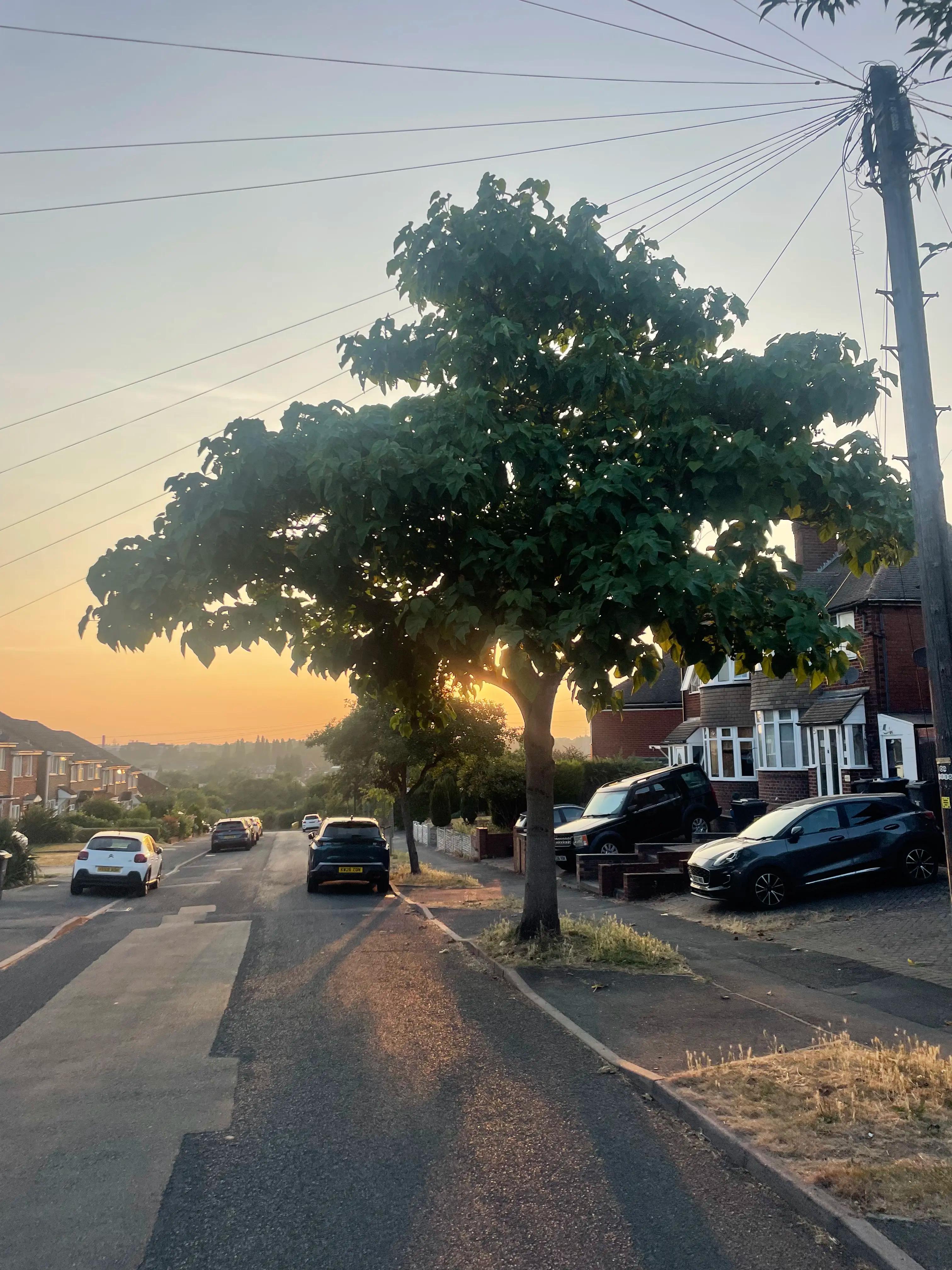
Foxglove Tree (Paulownia tomentosa)
What can we do?
The simplest way that we can collectively help in the short term is to water the trees. Water whichever tree is nearest your house or workplace, whichever tree you think is struggling most, the youngest tree, the nicest tree, whatever. This watering could save that tree, the many benefits it gives us and the ones it will give to our grandchildren. You can also donate to Birmingham TreePeople and know that your donation will help pay our incredible watering team or pay our staff to continue research and community engagement and you can also volunteer your time and become a Tree Person yourself, helping out on our Tree Care team or at our Community Tree Nursery.
Street Trees for Living have a great breakdown on how we should be looking after young street trees which you can read about here.
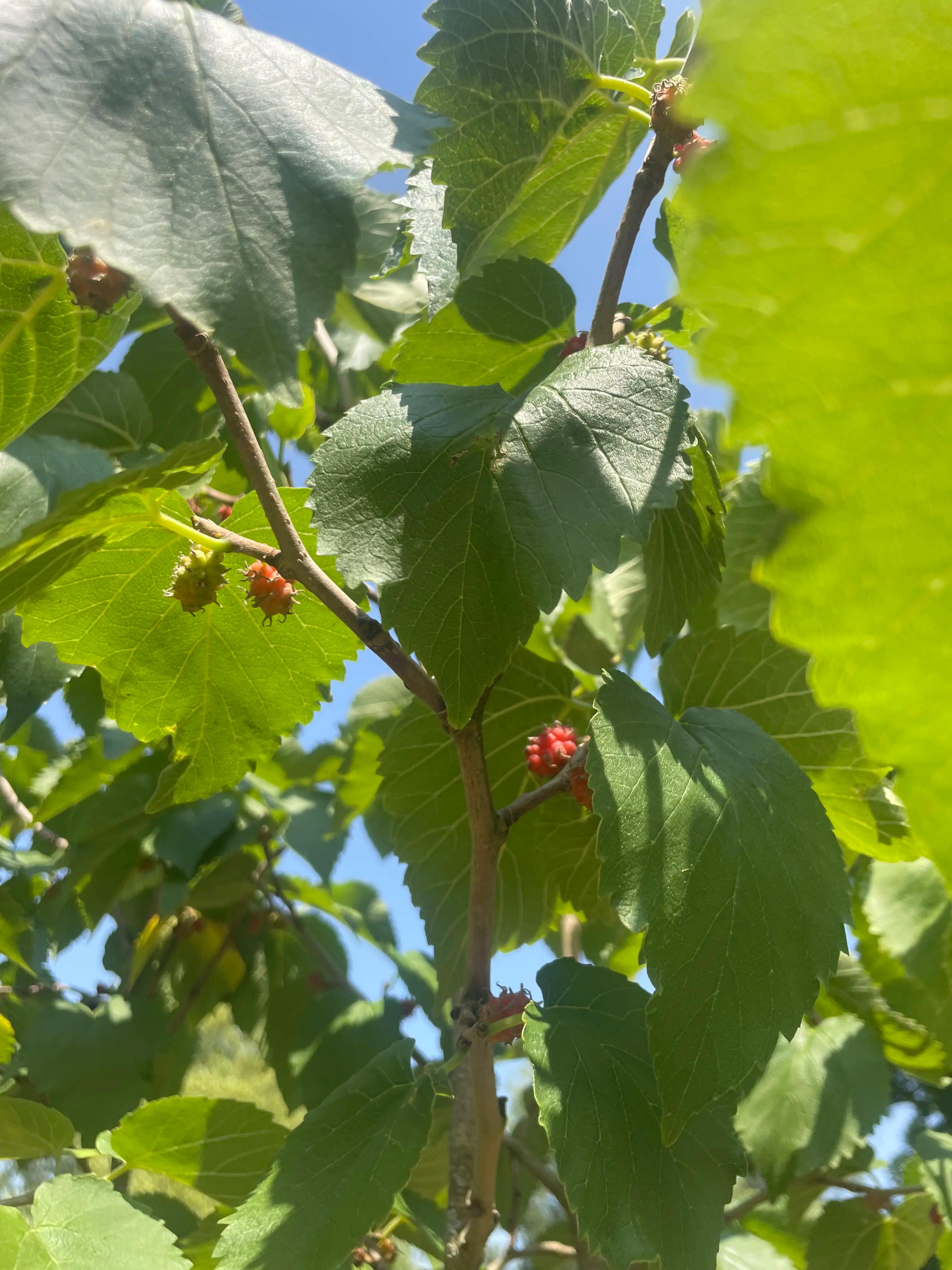
Black Mulberry (Morus nigra)